My favorite lake growing up was Lake Michigan because my friends and family would up up to the Indiana Dunes on the southern shore of Lake Michigan. There are huge sand dunes to climb up as well as a beautiful beach to lay and play on. We would even go up some saturdays with a group of people from church and clean up the beach area. I still go up to the Indiana Dunes when I see my friends during the summer.
Tuesday, October 25, 2011
Indian Mounds Lab-Decomposition of Leaf Litter
Decomposition of Leaf Litter
Decomposition is the process of converting dead organic matter into simpler and smaller compounds. This is the main source of nutrition for trees within the forest. The main products from complete decomposition are carbon dioxide, water, and inorganic ions (like ammonium, nitrate, phosphate, and sulfate). Insects, worms, bacteria, and fungi carrry out these processes at the surface of soil and underneath the soil surface. Temperature and soil moisture affect the rate of decomposition since this process is carried out by bacteria and fungi. The higher the temperature, the higher the rate of decomposition. Decomposition still does occur even under the snow. If soil moisture is low, decomposition is inhibited from bacteria and fungi drying out. Also, decomposition is slow in wet soils because anerobic conditions occur which are shorter than aerobic conditions.
Leaf litter decomposition can be measured by the litter bag technique. A pre-measured quantity is placed within the mesh bag which is placed within the litter layer of the forest floor. The bags can be measured of time to determine the amount of mass lost from decomposition. They are allowed to be exposed to normal temperature and moisture fluctuations while being decomposed by insects and microorganisms.
http://www.sewanee.edu/Forestry_Geology/watershed_web/Emanuel/DecompStudy/Decomp_SET.html
Decomposition is the process of converting dead organic matter into simpler and smaller compounds. This is the main source of nutrition for trees within the forest. The main products from complete decomposition are carbon dioxide, water, and inorganic ions (like ammonium, nitrate, phosphate, and sulfate). Insects, worms, bacteria, and fungi carrry out these processes at the surface of soil and underneath the soil surface. Temperature and soil moisture affect the rate of decomposition since this process is carried out by bacteria and fungi. The higher the temperature, the higher the rate of decomposition. Decomposition still does occur even under the snow. If soil moisture is low, decomposition is inhibited from bacteria and fungi drying out. Also, decomposition is slow in wet soils because anerobic conditions occur which are shorter than aerobic conditions.
Leaf litter decomposition can be measured by the litter bag technique. A pre-measured quantity is placed within the mesh bag which is placed within the litter layer of the forest floor. The bags can be measured of time to determine the amount of mass lost from decomposition. They are allowed to be exposed to normal temperature and moisture fluctuations while being decomposed by insects and microorganisms.
http://www.sewanee.edu/Forestry_Geology/watershed_web/Emanuel/DecompStudy/Decomp_SET.html
Friday, October 7, 2011
Negative Feedback Loop-Blood Sugar Levels
Blood Sugar Level Change
The body maintains a blood sugar concentration (blood glucose level) between 64.8 and 104.4 mg/dL. The amount of glucose (sugar) found within the blood is the blood sugar concentration. The body regulates the blood glucose level in order to sustain a metabolic homeostasis. Glucose provides most of the body's energy for the cells in a body. Glucose moves from the intestines or liver to the body cells through the bloodstream and is able to be absorbed into the cells through the hormone insulin, which is produced through the pancreas. Blood glucose levels fluctuate throughout the day, usually be lowest in the morning before the first meal and rise after meals for an hour or two. Levels outside the normal range of blood glucose levels are indicators of medical conditions such as hypoglycemia and hyperglycemia.
After eating a meal, the level can rise to 140 mg/dL for non-diabetics. Insulin cause cells in the body to take up the glucose from the blood. It is necessary to have insulin to remove the excess glucose since it can be fatal to have too much glucose. So blood sugar levels go up once you have eaten since there is a high amount of glucose or sugar coming into the body. Insulin begins to kick in to take up the glucose in order to lower the blood sugar levels and bring the body back to a homeostatic state.
Blood sugar levels being controlled by insulin can then be considered a negative feedback loop since the increased effect of insulin prohibits an increase in the blood sugar levels. The goal is to get back to homeostasis or below. To make the system become normal again.
Time Blood Sugar Level
0 104
5 145
10 180
15 185
20 132
25 120
30 108
35 105
40 104
45 105
The body maintains a blood sugar concentration (blood glucose level) between 64.8 and 104.4 mg/dL. The amount of glucose (sugar) found within the blood is the blood sugar concentration. The body regulates the blood glucose level in order to sustain a metabolic homeostasis. Glucose provides most of the body's energy for the cells in a body. Glucose moves from the intestines or liver to the body cells through the bloodstream and is able to be absorbed into the cells through the hormone insulin, which is produced through the pancreas. Blood glucose levels fluctuate throughout the day, usually be lowest in the morning before the first meal and rise after meals for an hour or two. Levels outside the normal range of blood glucose levels are indicators of medical conditions such as hypoglycemia and hyperglycemia.
After eating a meal, the level can rise to 140 mg/dL for non-diabetics. Insulin cause cells in the body to take up the glucose from the blood. It is necessary to have insulin to remove the excess glucose since it can be fatal to have too much glucose. So blood sugar levels go up once you have eaten since there is a high amount of glucose or sugar coming into the body. Insulin begins to kick in to take up the glucose in order to lower the blood sugar levels and bring the body back to a homeostatic state.
Blood sugar levels being controlled by insulin can then be considered a negative feedback loop since the increased effect of insulin prohibits an increase in the blood sugar levels. The goal is to get back to homeostasis or below. To make the system become normal again.
Time Blood Sugar Level
0 104
5 145
10 180
15 185
20 132
25 120
30 108
35 105
40 104
45 105
Monday, October 3, 2011
Soil Lab
The 12 Soil Orders
The twelve soil orders include:
1) Gelisols
2) Histosols
3) Spodosols
4) Andisols
5) Oxisols
6) Vertisols
7) Aridisols
8) Ultisols
9) Mollisols
10) Alfisols
11) Inceptisols
12) Entisols
Each soil is unique in the nutrient levels and where it is located in the world.
The soil I think is most interesting is Oxisols. Oxisols is a very weathered soil. You can find it in intertropical regions of the world. They are rich in Iron and Aluminum minerals and deficient in most other minerals. Globally, Oxisols only take up approximately 7.5% of ice-free land area. Hawaii is the only place in the U.S. where this soil can be found-approximately 0.02% of land area in U.S. There is low fertility within this soil but this can be compensated with treatments of lime and fertilizers. There are five suborders within the type Oxisols: Aquox, Torrox, Ustox, Perox, and Udox.
The twelve soil orders include:
1) Gelisols
2) Histosols
3) Spodosols
4) Andisols
5) Oxisols
6) Vertisols
7) Aridisols
8) Ultisols
9) Mollisols
10) Alfisols
11) Inceptisols
12) Entisols
Each soil is unique in the nutrient levels and where it is located in the world.
The soil I think is most interesting is Oxisols. Oxisols is a very weathered soil. You can find it in intertropical regions of the world. They are rich in Iron and Aluminum minerals and deficient in most other minerals. Globally, Oxisols only take up approximately 7.5% of ice-free land area. Hawaii is the only place in the U.S. where this soil can be found-approximately 0.02% of land area in U.S. There is low fertility within this soil but this can be compensated with treatments of lime and fertilizers. There are five suborders within the type Oxisols: Aquox, Torrox, Ustox, Perox, and Udox.
For the lab last Monday, we discussed the soil in the community garden behind Centenary United Methodist Church by Mercer in Macon, GA. They have set up a community garden for people to be educated on food and gardening, create a network for people in the local food system, and support and sustain food system in the Macon area by celebrating local food culture. Mark Vanderhoek from Mercer University is one of the main leaders of the Macon Roots organization.
In our lab, we took a split-spoon corer sample which gives you a soil profile. This allows you to see the depth of the soil and the type of soil the further you go down in depth. The change of color of the soil as well as the change in texture of the soil can be seen telling you about the type of soil and change of soil type over time.
We also took soil sieves which is a type of sifter that has stacks of mesh/grate over the bowls to allow sample of soil to be sorted out to see the different types of soil. The bigger holes in the mesh/grate are at the top and the grate gets smaller as you go down. The larger grains of soil are clay. The middle sized grains are silt and the small-fine grains of soil are sand. You can decide what type of soil it is through the percentages of clay, silt, and sand within the soil sample. This is found through the Soil Texture Diagram.
Lastly, we used the Dichotomous Key for Soil Samples to determine the classification of a soil sample we collected. Our group found our soil to be a Loamy sand because it remained in a ball when squeezed and it did not form a ribbon of uniform thickness and width when pressed between the thumb and forefinger.
Sunday, September 25, 2011
Plant Identification Lab
Plant Identification
Plants
1) Loropetalum (Loropetalum lanceum)-Bush that is a ground shrub but can get up to 12 meters tall. When it grows out, it has red tips around the outside of the leaves.
3) Hosta (Funkia)-Deer enjoy eating this plant, a leafy one with white around the edges.
4) Poison Ivy (Rhus radicans)- Clear liquid sap produced by the plant causes an itchy rash on most people. It takes the form of vines and shrubs. The leaves are three almond-shaped leaflets. (I am also highly allergic to it!?
5) Monkey Grass (Liriope muscari)- Tall grass used for boardering and filling out gardens. Long blades that come to a tip.
6) Elephant Ear (Colocasia esculenta)- Large leaves that are named after the shape and size of the ears of elephants as well as the flapping like quality.
Trees
1) Bradford Pear (Pyrus calleryana)- Native to China and Vietnam. They do not smell particularly pleasant, have been compared to the smell of dead fish. The tree has a flowering bud of white, five-petaled flowers. The leaves are an oval shape.
2) Willow Oak (Quercus phellos)- Medium-sized tree being very distinguishable because the leaves are shaped like willow leaves instead of the traditional oak leaves. The tree produces an acorn that animals eat from and the tree grows very rapidly so it is good for agricultural harvesting to use for making of paper and wood pulp.
3) American Sycamore (Platanus occidentalis)- Known for the flakey bark which comes from the stretching the bark goes through from the growth process of the tree. When the bark has flaked off, it can leave the trunk looking white or grey in color.
4) Pin Oak (Quercus palustris) - Medium-sized tree with leaves that have 5 or 7 lobes/teeth on them. The leaves have deep cut, U-shaped cuts in them. It also supports the growth of acorns.
5) Red Maple (Acer rubrum)- Medium to large sized tree, not as deeply lobed leaves. When there are five leaves together, the ones closer to the base are smaller than the other ones. It's more easily distinguishable than other maple species.
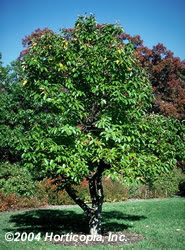
6) Chinese Chestnut (Castanea mollissima)- This tree has broad, toothed leaves and the fruit is a spikey ball that contains two to three chestnuts inside when broken open. This tree has been the most resistant to fungal disease that have attacked chestnut trees. American Chestnut trees were nearly wiped out by the fungal disease.
Ocmulgee River Lab
Clam Collection and Elevation Below Riverbank
Our class went to the Ocmulgee River to collect data on the elevation changes in the water under the riverbank as well as collect data on the amount of clams in different areas of the river.
To collect elevation data, we took two poles that were tied together with a string that was 10ft long. When you stretch them across the bank, you take the sting and put it to the bottom of the first pole and make the string level across to the second pole when standing the poles up vertically. The difference in heighth of the two poles is the change in elevation from the first pole to the second. You would just continue this across the river.
To collect data on the amount of clams across the river in different spots, you take a box sifter and a shovel and shovel in a scoop of dirt from the bottom of the river in different spots. You would then sift out the dirt into the water and count the amount of clams you found in that particular area. Another point of interest was whether the clams were alive or dead. You can tell this by seeing whether the clams are open or closed.
We did this data collection and it is posted bellow on the google map of the area and through the graph and table of data.
The path that is outlined is the path taken when doing the elevation below riverbank measurements. The faster flow of water tended to be in areas where the elevations was furthest below the riverbank.
Clam Collection Data
#1-5 Live clams with a slower current.
#2-2 Live clams with a slower current.
#3-2 Live clams with a slower current.
#4-5 Live clams with a medium current.
#5-On sandbar-1st scoop had 2 live clams and 5 dead clams and 2nd scoop lower with 8 dead clams.
#6-On sandbar-9 dead clams
#7-2 Live clams with a deeper elevation and faster current.
#8-No clams-deep elevation and fast current.
#9-No clams-deep elevation and fast current.
#10-Shallow water, riverbank-3 dead clams
#11-Shallow water, riverbank-9 dead clams
#12-Shallow water, riverbank-7 dead clams
#13-Shallow water, riverbank-over 20 dead clams
Conclusions
The clams tended to be living in medium shallow depths of the river and with a slower current. There was not really many clams found in the faster current areas. The shallow areas of land had many clams but they were all dead. The currents usually were faster in the deeper areas of land in the river.
Some possible explanations for these results: Faster currents drag clams down the river so slower current areas are better habitats for them. Also, the shallower areas of land may be an easier access for animals such as birds to pray on the clams thus there being many clams but they are not living.
Saturday, September 24, 2011
Updated October 25th-Journey of My Plant
Here is my plant....he is known as my plant. I got him on September 8th and he is a sunflower. I water him everyday and put him on the windowsill to get light.
His journey is best described through pictures.
He is getting really big as you can see. I think he needs a new bigger pot as well as he probably needs some help growing up. There are little baby green plants coming up in there as well. I am not sure what they are but they are pretty tiny.
Update
His journey is best described through pictures.
September 11th-Day 4
September 13th-Day 6
September 16th-Day 9
September 19th-Day 12
September 23-Day 16
He is getting really big as you can see. I think he needs a new bigger pot as well as he probably needs some help growing up. There are little baby green plants coming up in there as well. I am not sure what they are but they are pretty tiny.
Update
October 1-Day 24
October 5-Day 28
October 10-Day 33
October 15-Day 38
October 25-Day 48
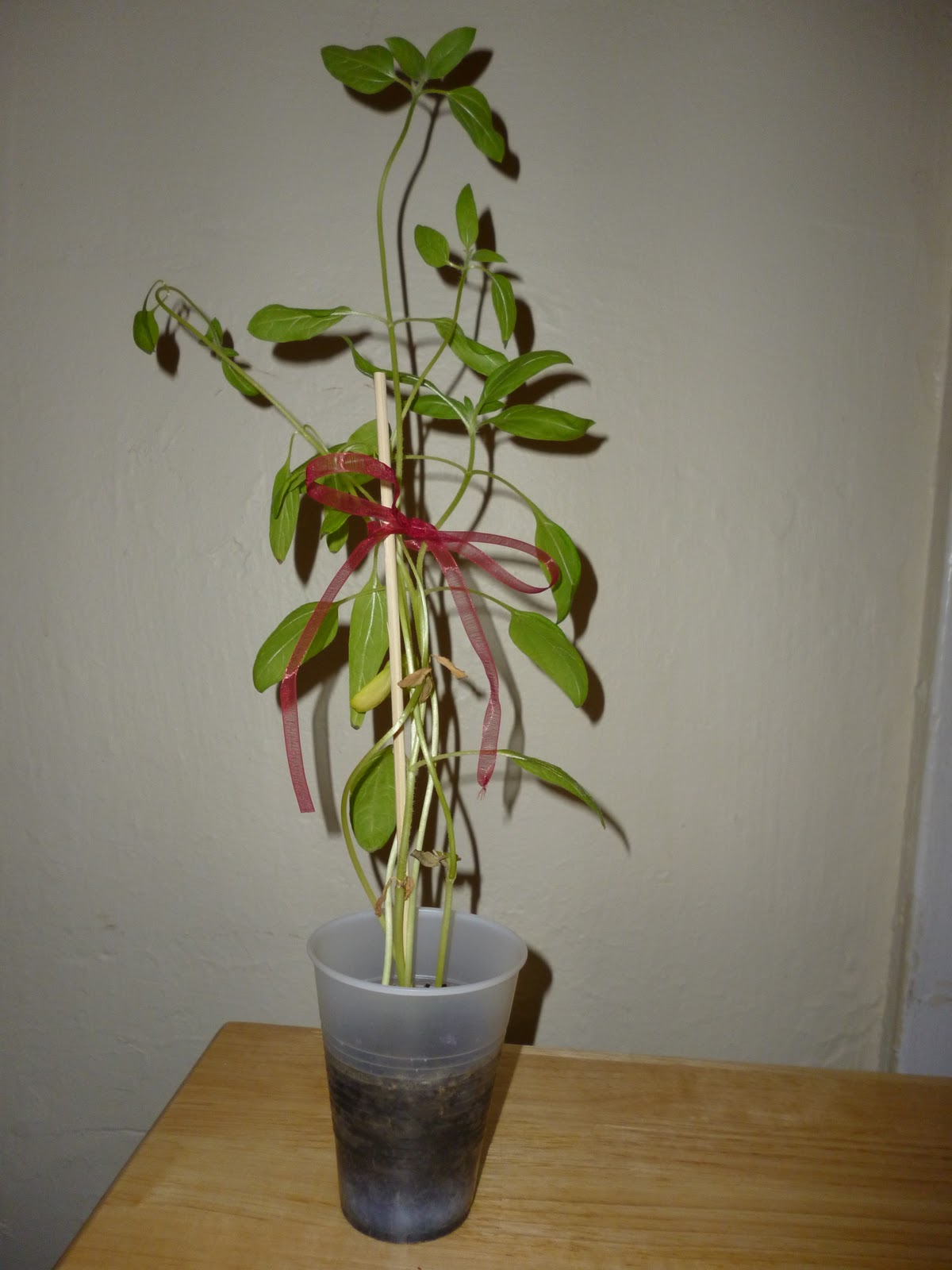
My little plant is doing really well. He needs a bigger pot to stretch out his roots. That will be my next step to guiding him in the right direction.
Last Update:
November 29- Over 2 months old!
December 8
Last Update:
November 29- Over 2 months old!
December 8
He still needs a bigger pot and some more sticks to hold him up since he is drooping.
Subscribe to:
Comments (Atom)